
Progress Bar Widget for Shopify Store
Boost conversions and increase average order value with a progress bar widget for a Shopify store. Learn strategies, benefits, examples, and expert tips in this in-depth guide.
Introduction
Ever noticed how a tiny nudge can turn a "maybe later" shopper into a "take my money now" customer? That's exactly where a progress bar widget for Shopify store steps in: quietly persuasive, visually engaging, and surprisingly powerful.
Picture this: a customer adds Rs. 1,200 worth of items to their cart, and suddenly a sleek bar pops up saying, "You're just Rs. 300 away from free shipping." Motivation unlocked.
In a world where attention spans are shrinking faster than ice in Mumbai heat, subtle UX cues like progress bars can dramatically influence buying behavior. This is not just another gimmick. It is psychology, design, and commerce rolled into one small but effective interface element.
What Is a Progress Bar Widget for Shopify Store?
At its core, a progress bar widget for Shopify store is a visual indicator that shows customers how close they are to unlocking a reward. That reward is usually free shipping, a discount, or a gift.
In AIOD, those rewards usually connect directly to volume discounts or free gift with purchase campaigns instead of acting like a disconnected widget.
It is simple, intuitive, and easy to understand at a glance.
Learn more about creating a progress bar for your Shopify store in this video: watch on YouTube
How It Works
- A customer adds items to their cart.
- The progress bar updates in real time.
- A message encourages them to reach a goal.
- The closer they get, the stronger the motivation.
It feels a little like leveling up in a game, except the reward is real-world value.
Why Progress Bars Work Like Magic
Let's not sugarcoat it. Customers do not need that extra item. But they often want to hit the goal.
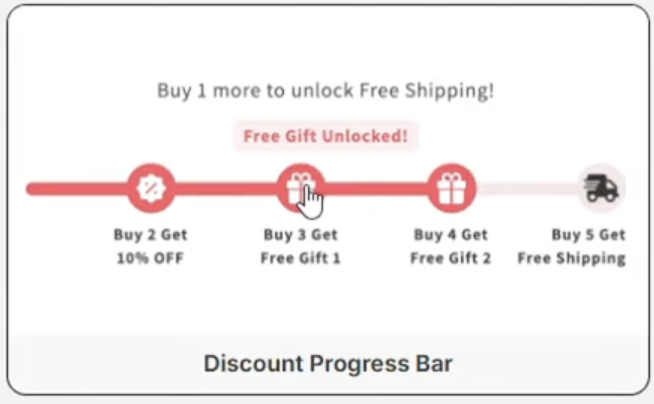
Example of a multi-step discount progress bar showing how customers unlock rewards such as percentage discounts, free gifts, and free shipping as they move closer to the goal.
The Psychology Behind It
1. Goal Gradient Effect
People speed up as they approach a goal. The closer they are, the harder they push.
2. Loss Aversion
Missing out on free shipping feels like losing money, even if the customer was not planning to spend more in the first place.
3. Instant Gratification
Real-time updates keep users engaged. The experience feels dynamic rather than static.
4. Gamification
Turning shopping into a small challenge adds a layer of fun to the cart experience.
The best progress bars do not interrupt the purchase journey. They make the next reward feel close enough to be worth chasing.
Key Benefits of Using a Progress Bar Widget
1. Boosts Average Order Value (AOV)
Customers naturally add more items to hit the reward threshold.
That is also why progress bars work so well with Buy X Get Y bundles and automatic storefront promotions.
2. Reduces Cart Abandonment
A clear incentive can keep customers from bouncing during checkout.
3. Enhances User Experience
It is visual, interactive, and easy to understand without adding complexity.
4. Encourages Smart Upselling
Instead of relying on aggressive popups, it gently nudges the shopper toward the next action.
5. Builds a Sense of Achievement
People love finishing what they start. That instinct matters in commerce too.
Where to Place Your Progress Bar for Maximum Impact
Placement is not a minor detail. It changes whether the widget feels useful, invisible, or annoying.
Top Performing Locations
- Cart Page: Right where final decisions happen.
- Product Page: Useful for early motivation.
- Sticky Header or Footer: Keeps the reward visible.
- Popup Modal: High attention, but easy to overdo.
Pro tip: One well-placed bar usually performs better than three competing ones.
Design Tips That Actually Convert
Keep It Clean and Clear
- Use contrasting colors.
- Avoid clutter.
- Make the goal obvious.
Use Compelling Copy
Instead of "Spend more to get free shipping," try "You're just Rs. 200 away from FREE shipping." The second version feels more immediate and more human.
Types of Rewards You Can Offer
Not all incentives are created equal, so choose rewards that feel valuable without damaging margins.
Popular Options
- Free Shipping Thresholds
- Discount Unlocks
- Free Gifts
- Exclusive Access
- Bundle Deals
Example Strategy
| Cart Value | Reward |
|---|---|
| Rs. 1000 | Free Shipping |
| Rs. 2000 | 10% Off |
| Rs. 3000 | Free Gift |
Layered rewards can create a stronger sense of momentum as the cart grows.
If you want to operationalize those tiers in Shopify, the next page to review is the volume discounts product overview.
Here is what that can look like in practice:
This type of milestone-based progress bar works especially well for stores that want to stack incentives instead of relying on a single threshold.
How to Set the Perfect Threshold
Set it too high and customers give up. Set it too low and you lose margins.
Finding the Sweet Spot
- Analyze your current AOV.
- Set the goal 20-30% higher.
- Test and tweak.
There is no universal threshold. What works for fashion may flop for electronics.
Best Practices for Shopify Store Owners
Do This
- Personalize messages based on cart value.
- Use urgency when it matches the campaign.
- Keep the widget mobile-friendly.
- A/B test different versions.
Avoid This
- Overloading the page with multiple offers.
- Using confusing messaging.
- Installing slow-loading widgets.
- Ignoring analytics.
Common Mistakes (And How to Fix Them)
Mistake #1: Vague Messaging
Fix: Be specific. Always show the exact remaining amount.
Mistake #2: Poor Design
Fix: Match the widget to your brand aesthetic.
Mistake #3: No Real Incentive
Fix: Offer something genuinely valuable.
Mistake #4: Ignoring Mobile Users
Fix: Optimize for smaller screens. Seriously, do not skip this.
Real-World Example: How It Plays Out
Imagine you run a skincare store. A customer adds a face wash for Rs. 499 and a moisturizer for Rs. 699. Total cart value: Rs. 1198.
Your progress bar says: "You're Rs. 302 away from FREE shipping."
Now the customer thinks, "Maybe I'll grab that serum too." Next thing you know, the order total jumps to Rs. 1599. That is the mechanic working exactly as intended.
How to Measure Success
If you are not tracking, you are guessing.
Key Metrics to Watch
- Average Order Value (AOV)
- Conversion Rate
- Cart Abandonment Rate
- Revenue Per Visitor
Tools to Use
- Shopify Analytics
- AIOD automatic discounts for Shopify
Future Trends: What's Next for Progress Bars?
The humble progress bar is evolving fast.
- AI-driven personalization
- Dynamic rewards based on behavior
- Integration with loyalty programs
- Predictive upselling
We are still early. The next generation of progress bars will likely feel much more responsive to each shopper's behavior in real time.
FAQs About Progress Bar Widget for Shopify Store
1. Is a progress bar widget suitable for all Shopify stores?
Yes, but the strategy should still match your niche, pricing, and reward structure.
2. Will it slow down my website?
Not if you use a well-optimized app or a lightweight implementation.
3. Can I customize the design?
Absolutely. Most widgets support customization for colors, messaging, and placement.
4. How often should I change the reward threshold?
Test periodically. Monthly or quarterly usually works well.
5. Does it really increase sales?
In many cases, yes. When implemented correctly, it can lift AOV and improve conversion behavior.
Conclusion: Small Bar, Big Impact
A progress bar widget for Shopify store might look like a tiny UI tweak, but it can have a serious commercial impact.
It taps into human psychology, improves the shopping experience, and nudges customers toward spending more without feeling pushy. In e-commerce, that balance matters.
If you are serious about scaling your Shopify store, this is one of those small improvements that can punch above its weight. Start simple, test relentlessly, and optimize constantly.
For the broader operating model, continue with the AIOD complete guide, review the rule builder, or compare options in the best automatic discount apps for Shopify article.